
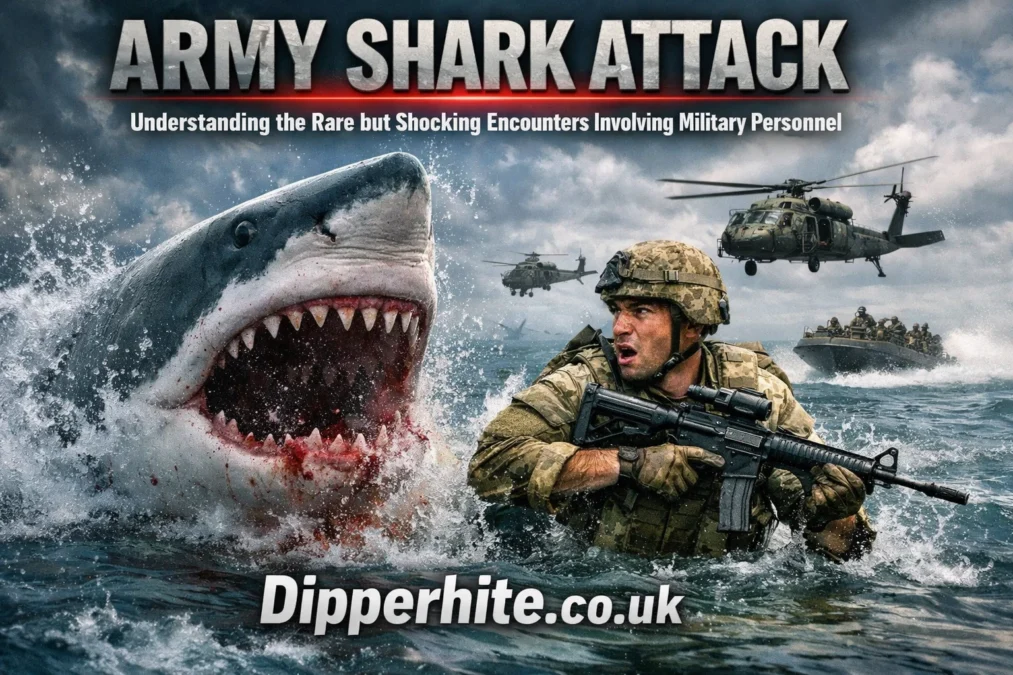

The phrase “army shark attack” immediately captures attention, blending two powerful forces—trained military personnel and one of the ocean’s most feared predators. While such incidents are extremely rare, they spark widespread curiosity, concern, and debate about safety, training, and environmental awareness.
This comprehensive guide explores what an army shark attack really means, the circumstances behind such encounters, how often they occur, and what can be learned from them. Whether you’re researching a recent incident or seeking authoritative insights, this article provides a clear, expert-level breakdown of the topic.
What Is an Army Shark Attack?
An army shark attack refers to an incident where military personnel, typically soldiers or trainees, encounter or are attacked by sharks during operations, exercises, or recreational activities in marine environments. These situations often occur during amphibious training, coastal missions, or survival drills.
Although the term sounds dramatic, most army shark attack cases are isolated and accidental rather than targeted. Sharks do not seek humans as prey, and these incidents are usually the result of environmental overlap between human activity and shark habitats.
Why Military Personnel Are at Risk in Certain Environments
Military training often takes place in challenging, real-world conditions, including oceans, rivers, and coastal zones. Soldiers may spend extended periods in the water, increasing their exposure to marine wildlife, including sharks.
Factors such as low visibility, splashing, and the presence of fish or bait in the water can unintentionally attract sharks. During an army shark attack scenario, these environmental triggers can play a larger role than any deliberate behavior by the animal.
How Common Are Army Shark Attack Incidents?
Army shark attack events are extremely rare when compared to global shark attack statistics. Most recorded shark encounters involve civilians, particularly surfers and swimmers, rather than trained military personnel.
However, because military operations often occur in remote or less-monitored areas, some incidents may go underreported. Even so, the probability of experiencing an army shark attack remains very low, especially with modern safety protocols in place.
Real-World Examples and Historical Context
There have been a few documented cases of army shark attack incidents throughout history, often during wartime or intensive training exercises. One of the most cited examples involves naval personnel stranded at sea, where shark encounters became a serious threat.
These historical events highlight how extreme conditions, such as dehydration, injury, and prolonged exposure, can increase vulnerability. In modern times, improved equipment and rescue systems have significantly reduced such risks.
Environmental Triggers Behind Shark Encounters
Sharks rely heavily on sensory cues such as vibrations, smell, and movement. In an army shark attack situation, activities like rapid swimming, gear noise, or even minor injuries can attract attention.
Water conditions also play a role, including temperature, depth, and the presence of prey species. Understanding these triggers helps military units develop strategies to minimize risk during aquatic operations.
Safety Protocols Used by Military Units
Modern military organizations implement strict safety measures to prevent incidents like an army shark attack. These include pre-mission environmental assessments, monitoring marine activity, and using protective gear when necessary.
Training programs also educate personnel on how to behave in shark-prone waters. This includes maintaining calm movements, avoiding isolation, and recognizing warning signs in the environment.
Comparison of Civilian vs Military Shark Attack Risks
| Factor | Civilian Risk | Military Risk |
|---|---|---|
| Frequency | Higher due to recreational exposure | Lower due to controlled environments |
| Awareness | Often limited | Extensive training and protocols |
| Environment | Beaches, surf zones | Open ocean, remote coastal areas |
| Response Preparedness | Varies widely | Highly coordinated and rapid |
| Risk Mitigation | Personal responsibility | Institutional safety systems |
This comparison shows that while civilians face more frequent encounters, military personnel are generally better prepared to avoid or respond to an army shark attack.
Psychological Impact on Survivors
Experiencing an army shark attack can have lasting psychological effects, even if physical injuries are minor. Survivors often report heightened anxiety, fear of water, and recurring memories of the event.
Military support systems typically include counseling and rehabilitation to help personnel recover mentally. Addressing these effects is essential for maintaining operational readiness and overall well-being.
Common Misconceptions About Shark Attacks
One widespread myth is that sharks actively hunt humans, which is not supported by scientific evidence. Most army shark attack incidents are cases of mistaken identity or curiosity rather than aggression.
Another misconception is that military training eliminates all risk. While preparation reduces danger, it cannot fully control natural environments, making awareness and adaptability crucial.
Practical Survival Strategies in Shark-Prone Waters
If a soldier or individual finds themselves in a potential army shark attack situation, certain strategies can improve safety. Staying calm, maintaining eye contact with the shark, and avoiding erratic movements are key principles.
Defensive actions, such as targeting sensitive areas like the eyes or gills, may be necessary in extreme cases. However, prevention remains the most effective approach, emphasizing situational awareness and teamwork.
The Role of Technology in Preventing Incidents
Advancements in technology have significantly reduced the likelihood of an army shark attack. Devices such as sonar systems, underwater drones, and shark deterrent equipment help monitor and manage risks.
Wearable technology and communication systems also allow for faster response times in emergencies. These innovations continue to enhance safety for military personnel operating in marine environments.
Expert Insight on Shark Behavior and Risk
“Shark attacks are incredibly rare and usually the result of confusion rather than intent,” notes a leading marine biologist. “Understanding their behavior is the most effective way to reduce risk.”
This perspective reinforces the importance of education and awareness in preventing an army shark attack. Knowledge, rather than fear, is the strongest defense.
Read More: Interior Department RBFF Grant Cancellation: What They’re Not Telling You
Conclusion
The concept of an army shark attack may sound alarming, but the reality is far less dramatic than popular imagination suggests. These incidents are rare, often preventable, and increasingly well-managed through training, technology, and environmental awareness.
By understanding the factors that contribute to shark encounters and applying proven safety strategies, military personnel can operate confidently even in challenging marine conditions. Ultimately, the key lies in respect for nature, preparation, and informed decision-making.
FAQ Section
What does army shark attack mean?
An army shark attack refers to a shark encounter involving military personnel, typically during training or operations in marine environments.
How often do army shark attack incidents occur?
Army shark attack events are extremely rare and occur far less frequently than civilian shark encounters.
Are soldiers trained to handle shark encounters?
Yes, military personnel receive training on marine safety, including how to respond to situations that could lead to an army shark attack.
What should someone do during a shark encounter?
In an army shark attack scenario, staying calm, avoiding sudden movements, and maintaining visual contact with the shark can help reduce risk.
Can shark attacks be completely prevented?
While no environment is risk-free, proper training and awareness significantly lower the chances of an army shark attack.