
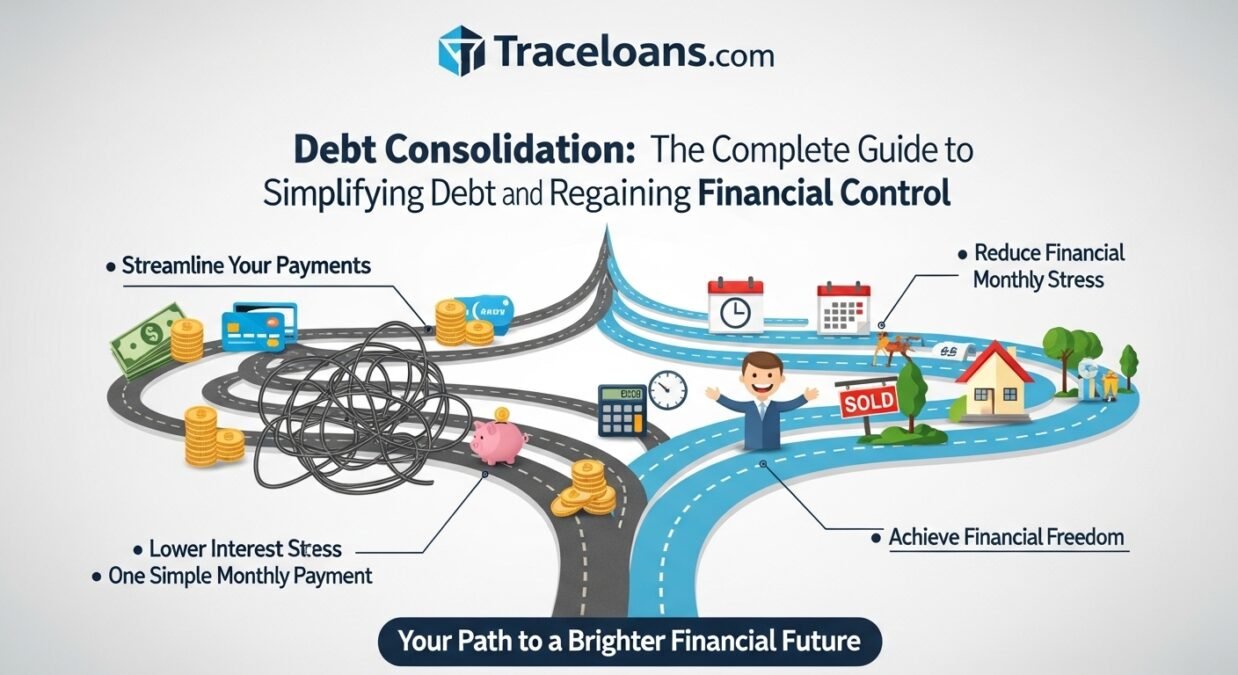

Managing multiple debts can feel overwhelming. Between varying interest rates, multiple due dates, and the constant pressure of monthly payments, many borrowers struggle to stay organized while making meaningful progress toward financial freedom.
This is where traceloans.com debt consolidation becomes an important topic for consumers exploring ways to streamline their financial obligations. Debt consolidation has become one of the most widely discussed debt-management strategies because it combines multiple debts into a single payment structure, potentially reducing complexity and improving financial stability. Understanding how debt consolidation works, its benefits, limitations, and best practices can help borrowers make informed decisions that support their long-term financial goals.
Understanding Debt Consolidation Fundamentals
Debt consolidation is the process of combining multiple debts into one loan or payment arrangement. Instead of managing several creditors, borrowers focus on a single monthly payment, often with a more predictable repayment schedule.
When exploring traceloans.com debt consolidation, consumers are generally seeking a simplified approach to debt management. This strategy may apply to credit card balances, personal loans, medical debt, or other qualifying obligations that can be merged into a unified repayment plan.
Why Debt Consolidation Has Become Increasingly Popular
Modern consumers often carry multiple forms of debt simultaneously. Credit cards, installment loans, and unexpected expenses can create a complex financial landscape that becomes difficult to manage effectively.
The growing interest in traceloans.com debt consolidation reflects a broader trend toward financial simplification. Many borrowers prioritize convenience, clarity, and better budgeting opportunities when evaluating debt-relief solutions.
How Debt Consolidation Works in Practice
A consolidation loan typically pays off several existing debts. The borrower then repays the new loan according to agreed-upon terms, replacing multiple obligations with a single account.
In the context of traceloans.com debt consolidation, borrowers often evaluate factors such as loan terms, monthly payments, interest rates, repayment periods, and eligibility requirements before proceeding with a consolidation strategy.
Common Types of Debt Eligible for Consolidation
Many forms of unsecured debt can potentially be consolidated. Credit card balances are among the most common because they frequently carry high interest rates that make repayment more challenging.
Personal loans, medical bills, retail financing balances, and certain other consumer debts may also qualify. Understanding which obligations can be combined is an important step in determining whether consolidation aligns with a borrower’s financial situation.
Key Benefits of Debt Consolidation
One of the primary advantages of debt consolidation is payment simplification. Managing a single due date can reduce missed payments and improve overall financial organization.
Another potential benefit is cost savings. Depending on the loan terms, borrowers may secure lower interest rates than those associated with high-interest revolving credit accounts, helping them reduce total repayment costs over time.
The Relationship Between Interest Rates and Savings
Interest rates significantly influence the effectiveness of any consolidation strategy. Lower rates can reduce monthly payments and decrease the overall amount paid throughout the loan’s lifetime.
However, borrowers should look beyond interest rates alone. Fees, repayment periods, and loan conditions can impact the total cost of borrowing, making comprehensive evaluation essential before committing to any debt solution.
Financial Organization Through Consolidation
Many consumers underestimate the psychological burden associated with managing multiple debts. Numerous statements, payment dates, and account balances can contribute to financial stress.
By reducing complexity, traceloans.com debt consolidation may help borrowers establish clearer budgeting habits. Greater visibility into repayment progress often improves confidence and financial decision-making.
Comparing Debt Management Strategies
Debt consolidation is only one option among several debt-management approaches. Alternatives include debt settlement, credit counseling, balance transfers, and accelerated repayment methods.
Each strategy serves different financial circumstances. Borrowers should evaluate their income stability, debt levels, credit profile, and long-term goals before selecting the most appropriate solution.
Debt Consolidation vs. Debt Settlement
Debt consolidation focuses on repaying debt through structured financing. The objective is simplification rather than reducing the principal amount owed.
Debt settlement, by contrast, typically involves negotiating with creditors to accept less than the full balance. While settlement may reduce debt amounts, it can also carry greater credit-related consequences and risks.
Debt Consolidation vs. Balance Transfer Cards
Balance transfer credit cards allow borrowers to move existing balances to a card offering promotional interest rates. These promotions can create opportunities for temporary interest savings.
Unlike balance transfers, consolidation loans generally provide fixed repayment schedules and predictable monthly payments. The right option depends on individual financial circumstances and repayment discipline.
Factors That Influence Eligibility
Lenders typically evaluate several factors before approving consolidation loans. Credit history remains one of the most influential considerations during the application process.
Income stability, debt-to-income ratio, employment status, and existing financial obligations may also affect approval decisions. Stronger financial profiles often receive more favorable loan terms.
The Role of Credit Scores
Credit scores provide lenders with insight into borrowing behavior and repayment reliability. Higher scores often improve access to lower interest rates and better financing opportunities.
Even borrowers with less-than-perfect credit may find debt consolidation options available. However, terms and conditions may vary significantly based on overall creditworthiness.
Evaluating Monthly Payment Affordability
Lower monthly payments can provide short-term relief, but borrowers should consider the total repayment timeline. Extending loan terms may reduce monthly obligations while increasing total interest costs.
A successful consolidation strategy balances affordability with efficiency. The goal should be sustainable repayment without unnecessarily prolonging debt obligations.
Important Costs to Consider
Borrowers sometimes focus exclusively on advertised rates while overlooking additional expenses. Origination fees, administrative charges, and other costs can affect overall loan value.
Before pursuing traceloans.com debt consolidation, reviewing all potential fees ensures a more accurate understanding of total borrowing costs and expected savings.
Signs That Debt Consolidation May Be Appropriate
Individuals struggling to manage multiple payments often benefit from exploring consolidation. Frequent missed due dates, budgeting challenges, and high-interest credit card balances may indicate a need for simplification.
Debt consolidation can also be attractive for borrowers who have stable income but require a more organized repayment structure to accelerate financial progress.
Situations Where Consolidation May Not Be Ideal
Consolidation does not solve underlying spending issues. Borrowers who continue accumulating new debt after consolidation may find themselves in a worse financial position.
Additionally, individuals with very low debt balances or access to faster repayment methods may not experience substantial benefits from a consolidation loan.
The Importance of Financial Discipline
Debt consolidation works most effectively when combined with responsible financial habits. Creating a realistic budget remains essential for long-term success.
Borrowers who track expenses, prioritize savings, and avoid unnecessary borrowing often achieve better outcomes after consolidating their debts into a single repayment plan.
Building a Debt Repayment Strategy
A structured repayment strategy increases the likelihood of success. Setting measurable goals helps borrowers remain motivated throughout the repayment journey.
Regularly reviewing progress can reveal opportunities for additional principal payments, potentially shortening repayment periods and reducing overall interest expenses.
Debt Consolidation and Financial Stress Reduction
Financial stress affects more than bank accounts. It can influence mental well-being, productivity, and personal relationships.
Many consumers pursue traceloans.com debt consolidation because reducing payment complexity provides greater peace of mind. Improved financial visibility often creates a stronger sense of control.
Common Misconceptions About Consolidation
One widespread misconception is that debt consolidation eliminates debt entirely. In reality, consolidation reorganizes repayment rather than erasing obligations.
Another misconception involves guaranteed savings. While savings are possible, outcomes depend on interest rates, repayment behavior, fees, and loan structure.
Industry Trends Shaping Debt Consolidation
Digital lending platforms have transformed the borrowing experience. Online applications, automated verification systems, and faster decision-making processes have increased accessibility.
Consumers researching traceloans.com debt consolidation are participating in a broader shift toward technology-driven financial services designed to enhance convenience and transparency.
The Role of Financial Education
Financial literacy plays a crucial role in debt management success. Understanding concepts such as interest rates, amortization, and credit utilization supports better borrowing decisions.
Borrowers who invest time in financial education are often better equipped to evaluate debt consolidation opportunities and avoid common pitfalls.
Practical Example of Debt Consolidation
Imagine a borrower carrying three credit card balances with different interest rates and payment dates. Managing these accounts requires constant attention and increases the risk of missed payments.
By consolidating the balances into a single loan, the borrower gains one payment schedule, clearer budgeting visibility, and potentially lower borrowing costs, depending on loan terms.
Debt Consolidation Comparison Table
| Feature | Credit Card Debt | Debt Consolidation Loan | Balance Transfer Card |
|---|---|---|---|
| Number of Payments | Multiple | One | One |
| Interest Rate Stability | Variable | Usually Fixed | Promotional Then Variable |
| Budgeting Simplicity | Moderate | High | High |
| Repayment Structure | Flexible | Structured | Flexible |
| Credit Impact | Varies | Varies | Varies |
| Long-Term Predictability | Lower | Higher | Moderate |
| Potential Interest Savings | Limited | Possible | Possible |
| Financial Organization | Moderate | Strong | Strong |
Expert Perspective on Debt Management
Financial professionals often emphasize the importance of creating a clear repayment plan before pursuing any debt solution.
As the renowned investor and author Warren Buffett once noted, “Do not save what is left after spending, but spend what is left after saving.” This principle highlights the value of disciplined financial management alongside any debt-reduction strategy.
Creating Long-Term Financial Stability
Debt consolidation should be viewed as part of a broader financial improvement plan rather than a standalone solution. Sustainable success requires consistent financial discipline.
Emergency savings, responsible credit usage, and proactive budgeting can help borrowers avoid future debt cycles while maintaining financial progress.
How Technology Supports Modern Debt Solutions
Digital financial tools now provide budgeting dashboards, payment reminders, and automated tracking features that simplify debt management.
Consumers researching traceloans.com debt consolidation increasingly expect seamless online experiences that combine convenience with educational resources and financial transparency.
Risks Borrowers Should Understand
Every financial product involves risk. Borrowers should carefully review repayment obligations, interest calculations, and contractual terms before accepting any loan.
Failing to make payments on a consolidation loan can negatively affect credit standing and create additional financial challenges, making responsible repayment essential.
Conclusion
Traceloans.com debt consolidation represents a topic of growing interest among consumers seeking a more organized approach to debt repayment. By combining multiple debts into a single payment structure, consolidation can simplify financial management, reduce stress, and potentially improve budgeting effectiveness.
Success, however, depends on careful evaluation, realistic expectations, and disciplined financial behavior. Borrowers who understand the mechanics of consolidation, compare available options, and maintain responsible spending habits are often best positioned to achieve meaningful long-term financial improvement. Whether the goal is reducing complexity, lowering interest costs, or regaining control of household finances, debt consolidation can serve as a valuable tool within a broader financial wellness strategy.
FAQ
What is traceloans.com debt consolidation?
Traceloans.com debt consolidation refers to debt-management and consolidation concepts that help borrowers combine multiple debts into a single repayment structure for easier financial management.
Can traceloans.com debt consolidation improve credit scores?
It may contribute to credit improvement over time if borrowers consistently make on-time payments and reduce overall credit utilization, though results vary by individual situation.
Is debt consolidation better than debt settlement?
Debt consolidation and debt settlement serve different purposes. Consolidation focuses on organized repayment, while settlement aims to reduce balances through negotiation.
Who should consider traceloans.com debt consolidation?
Individuals managing multiple debts, high-interest credit card balances, or complex payment schedules may benefit from evaluating traceloans.com debt consolidation options.
Does debt consolidation reduce the amount owed?
Typically, debt consolidation does not reduce the principal balance. Instead, it restructures repayment into a more manageable format.
What should borrowers evaluate before consolidating debt?
Borrowers should examine interest rates, fees, repayment terms, monthly affordability, credit implications, and long-term financial goals before pursuing traceloans.com debt consolidation.
How long does debt consolidation take?
The timeline varies depending on loan terms, debt amounts, and repayment strategies. Some borrowers complete repayment in a few years, while others choose longer repayment periods.
Can debt consolidation help reduce financial stress?
Many borrowers report reduced stress because consolidation simplifies payments, improves organization, and provides a clearer path toward becoming debt-free.