
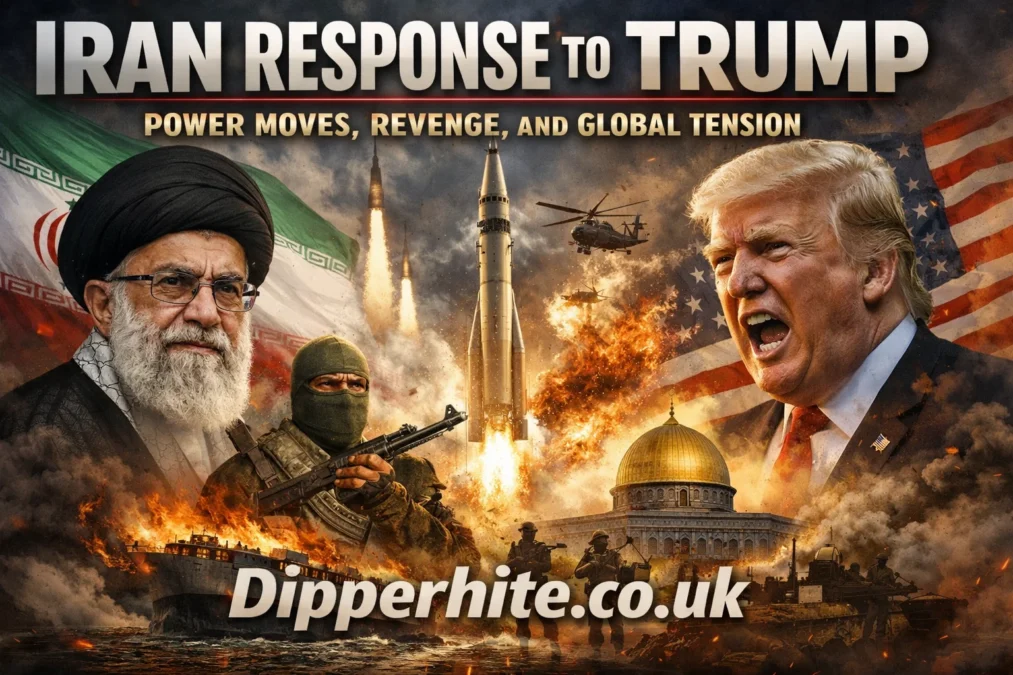

Understanding the iran response to trump requires more than headlines. It is a layered story of geopolitics, strategic signaling, and calculated restraint, shaped by decades of tension between the United States and the Islamic Republic. From fiery rhetoric to calibrated military actions, Iran’s reactions during the Trump era reveal a nation balancing domestic expectations, regional ambitions, and global consequences.
This article unpacks the full scope of the iran response to trump, offering deep insights into political strategy, military posture, economic pressures, and long-term implications for global stability.
The Political Context Behind Iran’s Strategy
The rise of Donald Trump marked a dramatic shift in U.S. foreign policy toward Iran, particularly with the withdrawal from the Iran nuclear deal. This move dismantled years of diplomatic progress and forced Iran to rethink its approach to engagement and confrontation with Washington.
In response, Iran adopted a dual-track strategy combining resistance with calculated diplomacy. The iran response to trump was not purely reactive; it was designed to preserve national pride while avoiding full-scale war, a balance that became central to Tehran’s decision-making framework.
Economic Pressure and Sanctions Response
The reimposition of U.S. sanctions under the Trump administration hit Iran’s economy hard, targeting oil exports, banking systems, and trade networks. These measures were part of a “maximum pressure” campaign intended to force Iran into renegotiating its nuclear commitments.
Iran’s response was multifaceted. The government sought to bypass sanctions through regional trade partnerships, increased reliance on domestic production, and alternative financial channels. This economic dimension of the iran response to trump highlighted resilience but also exposed vulnerabilities within Iran’s economic structure.
Military Signaling and Strategic Deterrence
One of the most visible aspects of the iran response to trump involved military signaling. Iran demonstrated its capabilities through missile tests, naval maneuvers in the Persian Gulf, and support for allied groups across the region.
These actions were carefully calibrated. Rather than provoking direct confrontation, Iran aimed to establish deterrence, sending a message that escalation would come at a high cost. This strategy allowed Iran to assert strength without crossing thresholds that might trigger a full-scale U.S. military response.
The Role of Proxy Networks
Iran’s regional influence extends through a network of allied groups in countries like Iraq, Syria, and Lebanon. During the Trump years, these proxies played a key role in shaping the iran response to trump, allowing Iran to exert pressure indirectly.
By leveraging these networks, Iran maintained plausible deniability while increasing its strategic reach. This approach complicated U.S. policy, as responses to proxy actions risked broader regional escalation, illustrating the complexity of modern asymmetric warfare.
The Impact of the Soleimani Assassination
A pivotal moment in the iran response to trump came with the killing of Qasem Soleimani in a U.S. drone strike. Soleimani was a central figure in Iran’s military strategy, and his death marked a significant escalation.
Iran responded with missile strikes on U.S. bases in Iraq, signaling both retaliation and restraint. The response was designed to satisfy domestic demands for action while avoiding casualties that could spiral into a wider conflict, showcasing the calculated nature of Iran’s decision-making.
Diplomatic Messaging and Global Perception
Iran’s leadership used diplomatic channels and public messaging to shape international perception. Officials framed U.S. actions as violations of international law, seeking support from European and global partners.
This aspect of the iran response to trump emphasized narrative control. By positioning itself as a victim of unilateral aggression, Iran aimed to isolate the U.S. diplomatically while maintaining legitimacy on the global stage.
Comparing Key Phases of Iran’s Response
Below is a structured breakdown of how the iran response to trump evolved over time:
| Phase | Trigger Event | Iran’s Response | Strategic Objective |
|---|---|---|---|
| Initial Reaction | U.S. exits nuclear deal | Diplomatic protests, partial compliance | Preserve agreement support |
| Economic Pressure | Sanctions intensify | Economic adaptation, reduced commitments | Mitigate damage |
| Military Escalation | Regional tensions rise | Proxy actions, military signaling | Establish deterrence |
| Crisis Point | Soleimani assassination | Missile retaliation | Controlled escalation |
| Stabilization | Global de-escalation efforts | Diplomatic engagement | Avoid war |
This progression highlights how the iran response to trump was not static but evolved with changing circumstances and strategic priorities.
Domestic Politics and Public Sentiment
Inside Iran, public opinion played a significant role in shaping policy decisions. Economic hardship and nationalist sentiment created pressure on leaders to respond strongly to U.S. actions.
At the same time, Iranian authorities had to manage internal stability. The iran response to trump often reflected this balancing act, combining assertive rhetoric with cautious execution to maintain both public support and political control.
The Role of International Allies and Rivals
Iran’s response was also influenced by its relationships with global powers such as Russia and China. These countries provided economic and diplomatic support, helping Iran withstand U.S. pressure.
However, reliance on external partners came with limitations. The iran response to trump had to account for shifting alliances and the interests of these powers, which sometimes aligned with Iran’s goals and other times constrained them.
Strategic Communication and Psychological Warfare
Iran invested heavily in strategic communication, using media, speeches, and symbolic actions to project strength. This psychological dimension was a key component of the iran response to trump.
As one analyst noted, “Iran’s greatest weapon is not just its missiles, but its ability to control perception and timing.” This insight captures how Iran used messaging to influence both domestic and international audiences.
Long-Term Implications for U.S.-Iran Relations
The legacy of the Trump era continues to shape U.S.-Iran relations today. The policies and responses during this period created new precedents for confrontation and negotiation.
The iran response to trump demonstrated that while conflict can escalate بسرعة, both sides have strong incentives to avoid full-scale war. This dynamic will likely influence future interactions, regardless of leadership changes.
Lessons from the Iran Response to Trump
There are several key takeaways from analyzing the iran response to trump. First, modern geopolitical conflicts are rarely linear; they involve overlapping layers of economic, military, and diplomatic strategies.
Second, restraint can be as powerful as aggression. Iran’s ability to calibrate its responses highlights the importance of strategic patience in international relations, especially in high-stakes environments.
Conclusion: A Calculated Balance of Power
The iran response to trump stands as a case study in strategic complexity. Faced with unprecedented pressure, Iran managed to navigate a path that combined resistance with restraint, avoiding catastrophic conflict while maintaining its դիր.
Ultimately, this period reshaped the geopolitical landscape, leaving behind lessons that continue to influence global politics. Understanding these dynamics is essential for anyone seeking to grasp the future of U.S.-Iran relations and the broader Middle East.
Read more: You Won’t Believe What Happens at the Scotty McCreery & Kane Brown Fall Concert”
FAQ Section
What was the main iran response to trump’s policies?
The primary iran response to trump involved a mix of economic adaptation, military signaling, and diplomatic messaging to counter U.S. pressure while avoiding full-scale war.
Why did Iran avoid direct war with the U.S.?
The iran response to trump showed a preference for controlled escalation, as full-scale conflict would have severe economic and military consequences for both sides.
How did sanctions influence Iran’s actions?
Sanctions were central to the iran response to trump, pushing Iran to develop alternative economic strategies and reduce reliance on global systems dominated by the U.S.
What role did proxies play in Iran’s strategy?
Proxy groups were a key part of the iran response to trump, allowing Iran to exert influence and pressure indirectly without direct confrontation.
Did the iran response to trump achieve its goals?
The iran response to trump achieved mixed results, preserving regime stability and deterrence but at significant economic cost and ongoing geopolitical tension.